North Africa's highest summit
Toubkal Summit Trek from Marrakech
Book a guided Toubkal summit trek from Marrakech with local mountain guides. Choose 2-day and 3-day Jbel Toubkal adventures via Imlil and Toubkal Refuge.
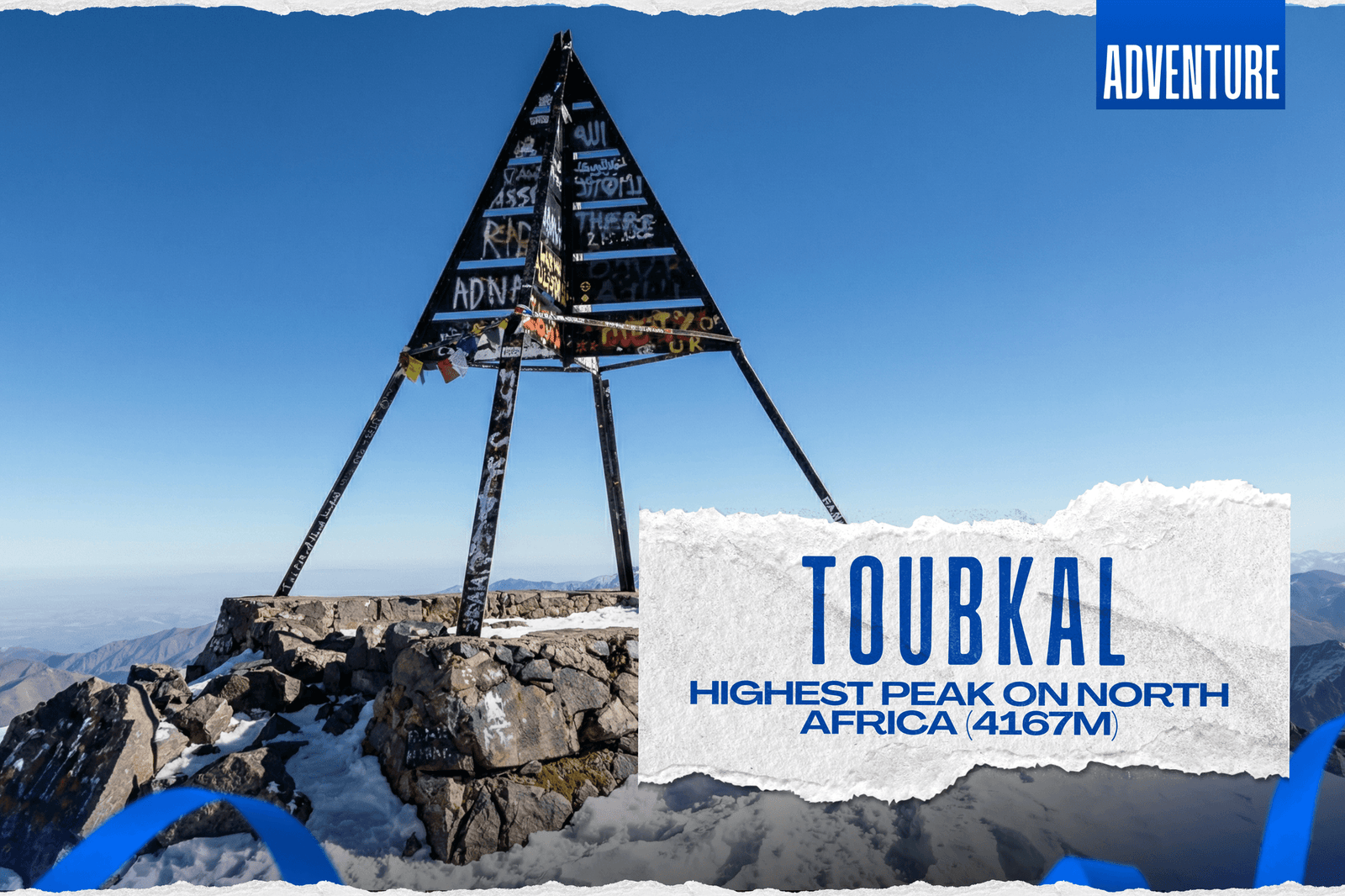
Rising to 4,167 metres, Jbel Toubkal is the highest mountain in North Africa and one of Morocco's defining adventures. A Toubkal summit trek combines a challenging high-altitude walk with Amazigh villages, walnut groves, rocky valleys and wide views across the High Atlas. Atlas Escapes organises guided departures from Marrakech with local knowledge at every stage.
Most travellers choose a two-day or three-day itinerary. Both begin with a transfer to Imlil and follow the mountain trail toward the Toubkal Refuge. The right option depends on your hiking experience, available time and preference for acclimatisation. We help you choose an itinerary that feels ambitious but realistic.
Choosing a two-day or three-day Toubkal trek
The two-day trek is the direct option. After meeting the guide in Imlil, the route climbs through Aroumd and the Mizane Valley toward the refuge area. An early summit start follows the overnight stay, with a descent to Imlil and return transfer to Marrakech after the climb. It suits fit hikers who are comfortable with two long mountain days.
The three-day itinerary creates a gentler rhythm. Extra time in Imlil or on an acclimatisation walk allows you to settle into the altitude before the refuge ascent. It also leaves more space for local encounters and recovery. The summit remains physically demanding, but the schedule is better suited to travellers who prefer not to rush the mountain.
The route from Imlil to Toubkal Refuge
Imlil is the practical gateway to the Toubkal massif. From the village, the trail passes terraced fields and mountain settlements before entering increasingly open terrain. The climb to the refuge is steady rather than technical, yet the distance and altitude make pacing important. Your guide manages rest stops and monitors how the group responds as the air becomes thinner.
The refuge area sits at roughly 3,200 metres and gives trekkers a base for the summit attempt. Conditions are simple and social, with hikers arriving from several routes. A warm meal, hydration and an early night matter more than luxury. Your guide confirms the morning plan after reviewing weather, trail conditions and the group's energy.
Summit morning, difficulty and preparation
Summit day normally begins before sunrise. The path rises over steep, loose mountain ground toward the broad summit ridge. Snow and ice can change the character of the route in colder months, while summer brings strong sun and large temperature differences between the refuge and peak. The final ascent rewards steady effort with views over the High Atlas and, on clear days, toward the Sahara.
You do not need technical climbing experience in dry summer conditions, but you should prepare for sustained uphill walking and a long descent. Regular hikes, stairs and endurance training are useful before travel. Winter ascents may require crampons, an ice axe and the skills to use them. Atlas Escapes will explain the expected conditions and essential equipment for your chosen dates.
When to book your Toubkal adventure
Spring and autumn often offer comfortable trekking temperatures, while summer is popular for generally dry trails and early starts. Winter provides a true mountaineering atmosphere but needs appropriate equipment and experience. Mountain weather can change quickly in every season, so the guide always has the final say on whether a summit attempt is responsible.
Tell us your dates, group size, hiking background and preferred itinerary. We will help shape a clear plan from Marrakech, explain what is included and answer practical questions before you arrive. The goal is not simply to reach a summit, but to enjoy a well-paced High Atlas journey led by people who know the terrain.
Practical answers