Practical guide to Morocco highest peak
Jbel Toubkal Guide
Practical Jbel Toubkal guide covering trekking routes, difficulty, altitude, Imlil, refuge information and guided climbs in the High Atlas.
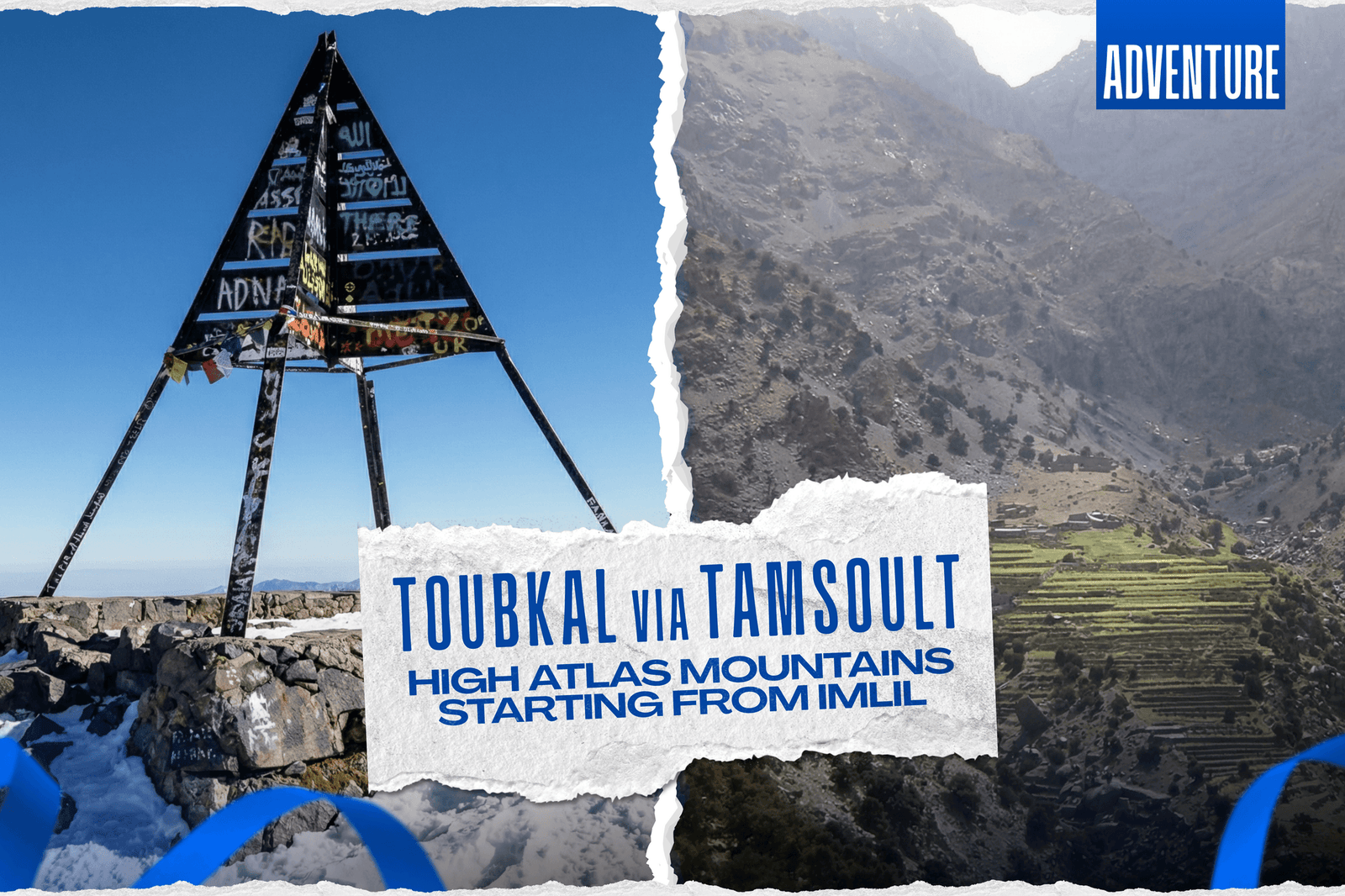
Jbel Toubkal, also called Mount Toubkal, is the highest peak in Morocco and North Africa at 4,167 metres. It is close enough to Marrakech for a short mountain trip, but high enough to require serious planning. The normal route is often described as non-technical in dry conditions, yet altitude, weather, loose ground and long walking days make it a real trek rather than a casual excursion.
This Jbel Toubkal guide explains the main route, difficulty, refuge experience, season choices and how a local guide supports the climb. It is written for travellers comparing two-day, three-day and longer High Atlas options from Imlil or Marrakech.
Where Jbel Toubkal is and how treks start
Jbel Toubkal rises in the High Atlas south of Marrakech. Most classic treks begin with a road transfer to Imlil, the main mountain village used as a trailhead. From there, routes pass through the valley toward Aroumd, Sidi Chamharouch and the Toubkal Refuge area before the summit attempt.
The short distance from Marrakech makes Toubkal attractive, but it can also make travellers underestimate the mountain. You move from city elevation to a refuge around 3,200 metres quickly, then start the summit climb early the next morning. Good pacing matters from the first hour.
Main routes and itinerary choices
The classic Imlil route is the most direct and practical option. A two-day itinerary climbs to the refuge on day one and attempts the summit on day two before returning to Marrakech. A three-day itinerary creates a slower rhythm, usually with more time around Imlil or a better acclimatisation structure.
Longer routes can approach through Tamsoult or Azzaden, adding quieter trails, waterfalls and broader views before joining the summit objective. These options suit travellers who want more than a quick up-and-down climb.
Difficulty and altitude
In dry conditions, Jbel Toubkal is usually a strenuous hike, not a technical rock climb. The difficulty comes from sustained ascent, altitude, loose mountain ground and a summit day that can feel long on the descent. Strong hikers may still feel the altitude near the refuge or above it.
Winter changes the mountain. Snow and ice can require crampons, an ice axe and the skills to use them safely. Weather can also make a summit attempt unwise. A responsible guide treats the summit as an objective, not a guarantee.
Refuge, guide and preparation
Most Toubkal climbs use a refuge night. The refuge is practical mountain accommodation with shared space, meals and a base for the early start. Bring warm layers, a headlamp, water capacity and personal essentials, and confirm what bedding or equipment is included before departure.
A local guide manages route decisions, timing, altitude awareness and communication with drivers and accommodation teams. Share your hiking history honestly so Atlas Escapes can recommend the route and pace that make sense for your group.
Practical answers